- Quick Summary
- What Is the Shinkansen?
- Shinkansen Lines and Routes
- Nozomi vs Hikari vs Kodama
- How to Buy Shinkansen Tickets
- Reserved vs Non-Reserved vs Green Car
- Step-by-Step: How to Ride the Shinkansen
- Onboard Etiquette and Tips
- Large Luggage Rules
- Frequently Asked Questions
- Ready to Ride the Shinkansen?
- Related Articles
Quick Summary
- How it works: Buy a ticket (machine, counter, or SmartEX app) → find the shinkansen gate → board your train. No reservation required for non-reserved seats.
- Tokyo to Kyoto: 2h 15min on the Nozomi, ~¥14,170 reserved seat (as of April 2026)
- JR Pass: Covers all shinkansen including Nozomi since October 2023. See our JR Pass guide
- Key tip: Buy your ekiben (station bento) before boarding — there’s no food cart on Nozomi trains
Need a JR Pass
First time riding Jump to the step-by-step guide below →
What Is the Shinkansen?
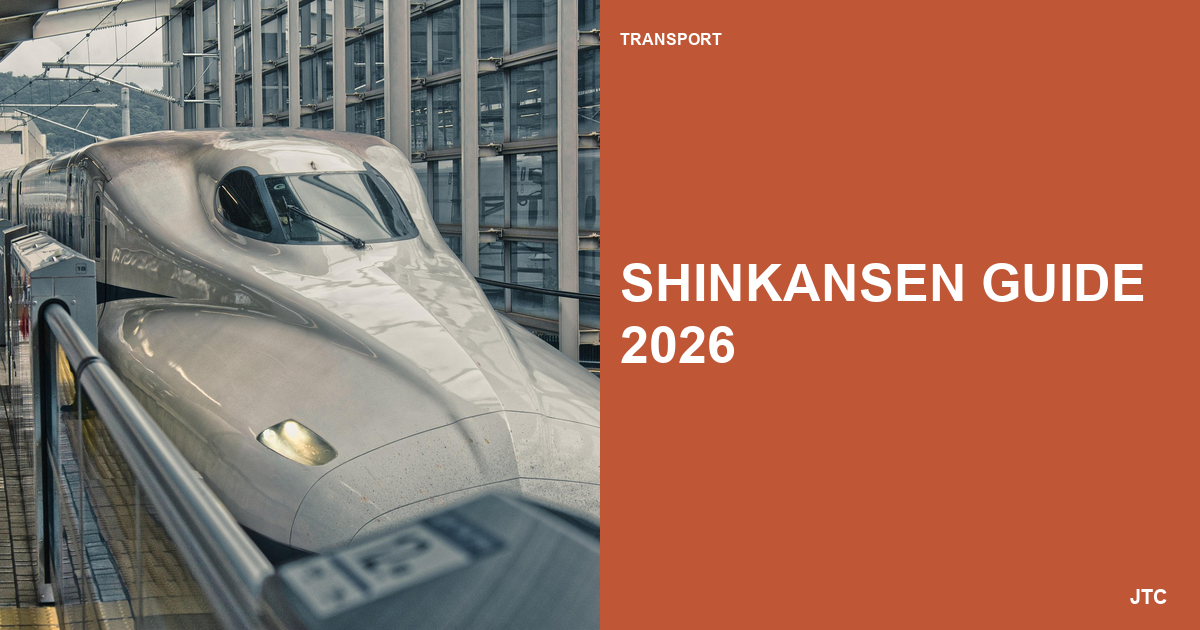
The shinkansen (新幹線) is Japan’s high-speed rail network, running at speeds up to 320 km/h (200 mph). Launched in 1964 for the Tokyo Olympics, it now connects most major cities across Honshu, Kyushu, and Hokkaido with over 2,700 km of dedicated track.
⚠️ Price Update: JR Pass prices will increase from October 1, 2026. The 7-day Ordinary pass rises from ¥50,000 to ¥53,000, the 14-day from ¥80,000 to ¥84,000, and the 21-day from ¥100,000 to ¥105,000. Prices shown below are valid until September 30, 2026.
The numbers speak for themselves: the Tokaido Shinkansen between Tokyo and Osaka carries over 450,000 passengers daily with an average delay of approximately 36 seconds per year. Trains depart every 3–10 minutes during peak hours.
For most tourists, the shinkansen is the primary way to travel between Tokyo, Kyoto, Osaka, Hiroshima, and other major destinations. It’s fast, punctual, comfortable, and — once you understand the system — straightforward to use.
The shinkansen is part of Japan’s broader rail network. For a complete overview of all transport options, see our Japan Transportation Guide.
🎫 Quick Recommendation
A JR Pass saves money if you’re traveling between cities. It covers most Shinkansen and JR trains across Japan.
Shinkansen Lines and Routes
Japan has several shinkansen lines operated by different JR companies. Here are the routes tourists use most (prices are for reserved seats in Ordinary Car, as of April 2026):
| Line | Route | Time | Price |
|---|---|---|---|
| Tokaido | Tokyo → Kyoto | 2h 15m | ~¥14,170 |
| Tokaido | Tokyo → Shin-Osaka | 2h 30m | ~¥14,720 |
| Sanyo | Shin-Osaka → Hiroshima | 1h 25m | ~¥10,640 |
| Sanyo | Shin-Osaka → Hakata (Fukuoka) | 2h 25m | ~¥15,400 |
| Tohoku | Tokyo → Sendai | 1h 30m | ¥11,210 |
| Hokuriku | Tokyo → Kanazawa | 2h 30m | ¥14,380 |
| Hokkaido | Tokyo → Shin-Hakodate-Hokuto | 4h 00m | ~¥23,430 |
| Kyushu | Hakata → Kagoshima-Chuo | 1h 15m | ¥10,450 |
Prices are approximate as of April 2026. Times shown are for the fastest train type on each line. Use Google Maps or the SmartEX app to check exact fares for your dates.
Planning a multi-city route Our 7-day itinerary and 14-day itinerary show you how to combine these routes efficiently.
Nozomi vs Hikari vs Kodama
On the Tokaido-Sanyo Shinkansen (Tokyo–Osaka–Hiroshima–Fukuoka), three train types run on the same tracks. The difference is how many stations they stop at:
| Type | Tokyo → Kyoto | Stops | Best For |
|---|---|---|---|
| Nozomi | 2h 15m | Major stations only (Shinagawa, Shin-Yokohama, Nagoya, Kyoto) | Fastest option. Most departures. |
| Hikari | 2h 40m | Major stations + a few more (varies by train) | Good alternative if Nozomi is full. |
| Kodama | 3h 45m | Every station | Only if going to a smaller station (Shizuoka, Hamamatsu). |
JR Pass holders: Since October 2023, you can ride all three types — including Nozomi. Before that, the Nozomi was excluded from the JR Pass. Many older travel guides still say you can’t ride Nozomi with a JR Pass, but that information is outdated. You can. See our JR Pass guide for full details.
Other shinkansen lines use different names. The Tohoku Shinkansen has Hayabusa (fastest), Yamabiko, and Nasuno. The Hokuriku Shinkansen has Kagayaki (fastest) and Hakutaka. The principle is the same — fewer stops means faster.
How to Buy Shinkansen Tickets
Option 1: Ticket Machines at the Station
Green-colored reserved seat ticket machines (指定席券売機) are at every major JR station. All have an English language option. Select your route, date, time, seat preference, and pay by credit card or cash. The machine prints your ticket(s) — usually two slips: a base fare ticket and a limited express surcharge ticket.
Option 2: JR Ticket Counter (Midori-no-Madoguchi)
The staffed “Green Window” (みどりの窓口) counters handle reservations, changes, and questions. Some staff speak English, especially at major stations like Tokyo, Shinjuku, Kyoto, and Shin-Osaka. Write down your departure station, destination, date, and time on a note to show staff — this speeds things up.
Option 3: SmartEX App (Online Booking)
The SmartEX app lets you book Tokaido-Sanyo Shinkansen tickets from your phone with a credit card. You get a QR code to scan at automatic ticket gates — no paper ticket needed. You can change your reservation for free up to 3 minutes before departure. Available for the Tokyo–Shin-Osaka–Hakata route.
Option 4: JR Pass
If you have a Japan Rail Pass, you ride shinkansen at no extra cost. For reserved seats, visit any ticket counter or green ticket machine and show (or scan) your pass. There’s no limit to how many reservations you can make, and they’re all free.
Reserved vs Non-Reserved vs Green Car
Non-Reserved Seats (Jiyūseki / 自由席)
No reservation needed. Board any non-reserved car (typically cars 1–3 on Nozomi) and sit in any open seat. The ticket costs about ¥530 less than a reserved seat. Works well on weekday afternoons and off-peak hours. During holidays and rush hours, you might stand.
Reserved Seats (Shiteiseki / 指定席)
Your specific seat is guaranteed. Choose window (A or E), middle (B — only in 3-seat rows), or aisle (C or D). Reserve at a ticket machine or counter. During Golden Week, Obon, and New Year, reserve at least a day ahead. JR Pass holders can reserve for free.
Green Car (First Class)
Wider 2+2 seating (instead of 3+2), more legroom, quieter carriages, and footrests. Costs roughly ¥5,000–¥8,000 more per trip. Worth it for the Tokyo–Osaka run if you want to work or rest comfortably. Available with a Green Car JR Pass at no extra charge.
Seat Layout: A-B-C-D-E
Standard shinkansen cars have 3+2 seating:
- A seat: Window (3-seat side)
- B seat: Middle (3-seat side) — avoid if possible
- C seat: Aisle (3-seat side)
- D seat: Aisle (2-seat side)
- E seat: Window (2-seat side)
Best picks: E for solo travelers (window + no neighbor on one side), D for aisle access, A for Mount Fuji views on the right side heading from Tokyo to Osaka.
Step-by-Step: How to Ride the Shinkansen
Step 1: Get Your Ticket
Use a ticket machine, JR counter, SmartEX app, or your JR Pass (see above). If you have a JR Pass with a reserved seat, you’ll get a small reserved seat ticket to carry with you.
Step 2: Find the Shinkansen Gate
Shinkansen have their own ticket gates, separate from regular train gates. Look for signs saying “Shinkansen” (新幹線) — they’re clearly marked in English at all major stations. At Tokyo Station, the Tokaido Shinkansen gates are on the Yaesu (east) side.
Step 3: Go Through the Gate
Insert your ticket(s) into the automatic gate slot — they come out on the other side, so grab them. With SmartEX, tap your phone or linked IC card. With a physical JR Pass, use the staffed gate and show your pass.
Step 4: Find Your Platform and Car
Check the departure board for your train’s platform number. On the platform, floor markings show where each car number stops. Line up at your car number. Non-reserved seat cars are marked with a different color (blue signs for non-reserved, orange/green for reserved on most lines).
Step 5: Board and Settle In
Find your row and seat letter. Overhead racks hold carry-on bags. Store your ticket in an accessible pocket — conductors check tickets periodically (though less frequently if you used a reserved seat or IC card gate).
Step 6: Arrive and Exit
When the announcement says your stop, grab your bags and exit. Feed your ticket through the gate on exit (it won’t come back). If you entered with an IC card via SmartEX, just tap out.
Onboard Etiquette and Tips
- Food and drinks: Eating on the shinkansen is completely normal and encouraged. Buy an ekiben (station bento, ¥800–¥1,500) from shops on the station concourse before boarding. Nozomi trains ended their onboard food cart service in October 2023, so buy everything beforehand.
- Phone calls: Keep your phone on silent. Calls should be made in the vestibule area between cars, not at your seat. Texting and browsing are fine.
- Power outlets: N700S trains (the newest and most common on the Tokaido line) have outlets at every seat. Older N700A trains have outlets on the window-side wall only. Bring a compact adapter.
- Wi-Fi: Free Wi-Fi is available (Shinkansen Free Wi-Fi) but speeds are inconsistent. An is more reliable for streaming or video calls.
- Recline your seat: It’s polite to glance behind before reclining, but reclining is normal — the seats are designed for it.
- Quiet: Shinkansen cars are remarkably quiet. Keep conversations at a low volume.
Large Luggage Rules
Since May 2020, bags measuring over 160 cm in total dimensions (length + width + height) require a special oversized baggage seat reservation. This is free — you just need to book a seat in the last row of a car, which has a luggage space behind the seats.
- Under 160 cm total: No reservation needed. Store in overhead rack or at your feet.
- 160–250 cm total: Reserve an “oversized baggage” seat (特大荷物スペースつき座席). Free, but you must reserve in advance.
- Over 250 cm total: Cannot be brought on board. Ship it via Yamato Transport (Takkyubin) to your next hotel.
- Penalty: Bringing oversized luggage without a reservation costs ¥1,000.
Standard suitcases (most check-in size bags under 158 cm) fit in the overhead rack without any reservation. If you’re traveling with two large suitcases, consider shipping one ahead — see our Japan Travel Tips for details on Takkyubin luggage delivery.
Frequently Asked Questions
Do I need to reserve a seat on the shinkansen?
No. You can ride non-reserved cars without any reservation — just buy a ticket and board. However, during peak periods (Golden Week, Obon in August, New Year), reserved seats are strongly recommended. With a JR Pass, reservations are free and unlimited.
Can I use my JR Pass on the Nozomi?
Yes. Since October 2023, JR Pass holders can ride Nozomi and Mizuho shinkansen. This covers the fastest trains on the Tokyo–Osaka–Hiroshima–Fukuoka corridor.
How early should I arrive at the station?
10–15 minutes is plenty. Unlike airports, there’s no security screening or boarding process — walk through the gate and board. Nozomi trains from Tokyo depart every 3–10 minutes, so missing one just means taking the next.
Can I eat on the shinkansen?
Absolutely. Ekiben (station bento boxes) are a beloved part of shinkansen culture. Buy one from station shops before boarding. Drinks including beer are also common. Just avoid strongly-scented foods as a courtesy to other passengers.
Where can I see Mount Fuji from the shinkansen?
Between Shin-Yokohama and Shizuoka stations (about 40–50 minutes after leaving Tokyo). Sit on the right side (seat A in the direction of travel toward Osaka) for the best views. Clear weather is essential — mornings often have better visibility than afternoons.
Ready to Ride the Shinkansen?
Related Articles
- 🆘 — Tap a phrase, show staff, get a reply in English. Made for travelers stuck at the station.
- Japan Transportation Guide 2026 — Trains, subways, buses, taxis, and more
- Japan Rail Pass Guide 2026 — Is the JR Pass worth it for your trip?
- Japan Travel Budget 2026 — How much does a trip to Japan cost?
- Japan Travel Guide Hub — The complete planning hub — every guide, every city, every step of the trip.
Still have questions about your Japan trip?
Ask Japan Travel Concierge AI — instant answers on transportation, food, customs, and what to do when something goes wrong.
Comments