- Quick Summary
- Japan’s Transportation System at a Glance
- Shinkansen (Bullet Train)
- JR and Private Railways
- IC Cards: Your Key to Everything
- Subway Systems
- Buses, Taxis and Other Options
- How to Save on Transportation
- Which Transport for Which Situation?
- Essential Tips for Getting Around
- Frequently Asked Questions
Quick Summary
- The basics: An IC card (Suica/Pasmo) + Google Maps = you can get anywhere in Japan
- Between cities: Shinkansen (bullet train) is the backbone — Tokyo to Kyoto in 2h15m
- Within cities: Subway and JR local trains. Tap your IC card, follow the signs
- Saving money: JR Pass (¥50,000/7 days) pays for itself with 2+ long-distance shinkansen trips
Japan’s Transportation System at a Glance
⚠️ Price Update: JR Pass prices will increase from October 1, 2026. The 7-day Ordinary pass rises from ¥50,000 to ¥53,000, the 14-day from ¥80,000 to ¥84,000, and the 21-day from ¥100,000 to ¥105,000. Prices shown below are valid until September 30, 2026.
New in 2026: You can now tap your contactless Visa, Mastercard, or other credit card directly at ticket gates in 700+ stations across the Kanto region (Tokyo, Yokohama, Saitama, and surrounding areas). This means you do not necessarily need a Suica card if you have a contactless credit card. However, Suica still works at more locations nationwide and at vending machines, convenience stores, and other non-transit payments.
| Transport | Speed | Cost | When to Use |
|---|---|---|---|
| Shinkansen | Up to 320 km/h | ¥10,000–23,000 | Between major cities |
| JR Local/Express | Moderate | ¥150–2,000 | Regional travel, airport access |
| Private Railways | Moderate | ¥150–2,500 | Specific routes (airports, suburbs) |
| Subway/Metro | Urban fast | ¥170–320 | Within cities |
| City Bus | Slow–moderate | ¥200–250 flat | Kyoto, rural areas |
| Highway Bus | Slow | ¥3,000–8,000 | Budget intercity travel |
| Taxi | Varies | ¥500+ base | Short hops, late night, luggage |
| Rental Car | Flexible | ¥5,000–10,000/day | Rural areas, Hokkaido, Okinawa |
🎫 Quick Recommendation
A JR Pass saves money if you’re traveling between cities. It covers most Shinkansen and JR trains across Japan.
Shinkansen (Bullet Train)
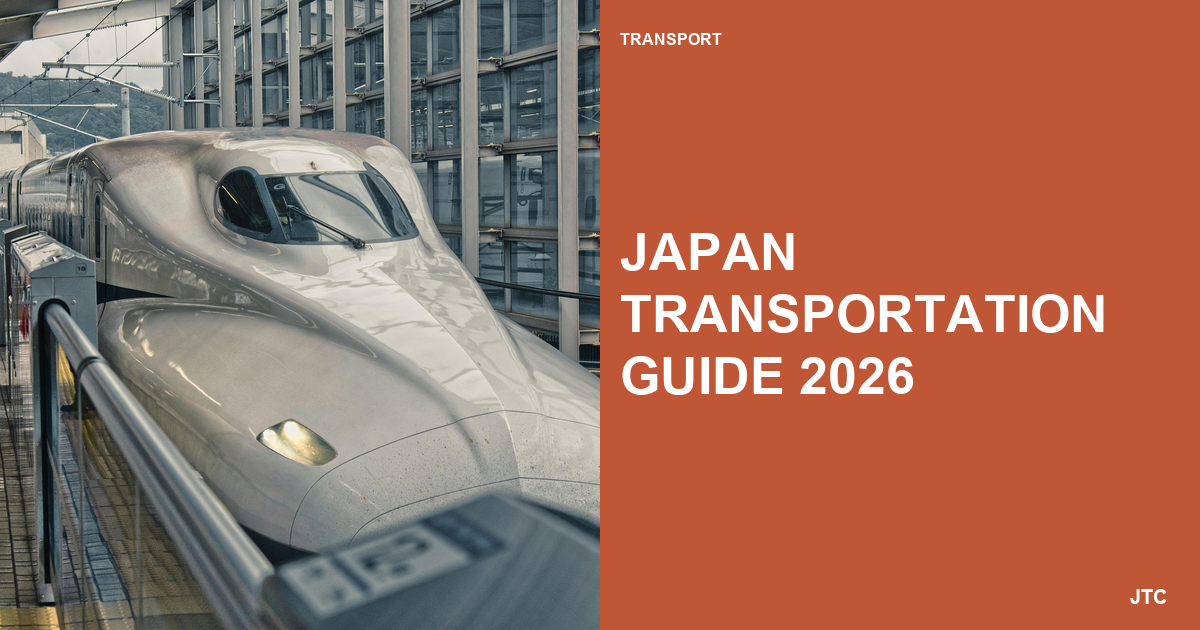
The shinkansen is Japan’s intercity backbone. Trains run at up to 320 km/h, depart every 10–15 minutes on major routes, and are famously punctual — the average delay across the entire network is under one minute per year.
Key Routes and Fares (as of April 2026)
- Tokyo → Kyoto: 2h15m, approximately ¥14,170 ($92 USD) — Tokaido Shinkansen (Nozomi)
- Tokyo → Osaka: 2h30m, approximately ¥14,400 ($94 USD)
- Tokyo → Hiroshima: 4h, approximately ¥19,440 ($126 USD)
- Tokyo → Kanazawa: 2h30m, approximately ¥14,380 ($93 USD) — Hokuriku Shinkansen
- Tokyo → Sendai: 1h30m, approximately ¥11,410 ($74 USD) — Tohoku Shinkansen
Train Types
Nozomi: Fastest, fewest stops. Not covered by JR Pass. Hikari: Slightly slower, covered by JR Pass. Kodama: All stops, also covered by JR Pass. For most routes, Hikari is only 10–20 minutes slower than Nozomi — no significant difference for most travelers.
Reservations
Reserved seats guarantee a specific seat. Unreserved cars (jiyuseki) are first-come, first-served — you can always get on the next train if the current one is full. Reserved seats cost no extra with a JR Pass. Without a pass, reserved seats add ¥530 to the base fare. During peak seasons (Golden Week, Obon, New Year), reserve to guarantee a seat.
For a complete guide to routes, reservations, and tips, see our Shinkansen Guide →.
JR and Private Railways
JR (Japan Railways)
JR operates the shinkansen and a vast network of local and express trains across Japan. In cities, JR lines serve as commuter railways alongside subway systems. The JR Yamanote Line (Tokyo’s green loop line) connects all major Tokyo neighborhoods. JR trains are covered by the JR Pass. For more details, see navigating Osaka’s subway.
Train categories:
- Local (futsu): Stops at every station. No extra fare
- Rapid (kaisoku): Skips smaller stations. No extra fare
- Limited Express (tokkyu): Fastest, fewest stops. Requires an additional limited express surcharge (¥500–3,000+) on top of the base fare. JR Pass covers the surcharge on JR limited express trains
Private Railways
Japan has numerous private railway companies that operate alongside JR. They’re not covered by the JR Pass, but they’re often the most convenient option for specific routes:
- Odakyu: Shinjuku to Hakone (Romancecar, 85 min)
- Keikyu: Haneda Airport to central Tokyo (11 min to Shinagawa)
- Keisei: Narita Airport to Tokyo (Skyliner, 36 min to Ueno)
- Hankyu: Osaka/Kyoto/Kobe connections
- Kintetsu: Osaka/Kyoto to Nara (fastest option)
- Nankai: Osaka Namba to Kansai Airport (Rapi:t, 34 min)
- Tobu: Tokyo Asakusa to Nikko
All private railways accept IC cards (Suica, Pasmo, etc.). Just tap and ride.
IC Cards: Your Key to Everything
An IC card is the single most important thing to get on Day 1 in Japan. It works on virtually every train, subway, bus, monorail, and tram across the country — plus convenience stores, vending machines, coin lockers, and many restaurants.
Which Card?
Suica (JR East, Tokyo), Pasmo (private railways, Tokyo), ICOCA (JR West, Osaka/Kyoto) — they’re all interchangeable nationwide. Buy whichever is available at the station where you arrive. The cards work identically everywhere.
How to Get One
- Physical card: Buy at any JR or private railway station ticket machine. ¥500 deposit + your chosen charge amount (¥1,000–10,000). The machine has English language options
- Mobile Suica (iPhone/Apple Watch): Set up in the Wallet app — no physical card needed, no deposit. Add funds via credit card. This is the most convenient option if you have an iPhone
- Mobile Suica (Android): Available via Google Pay in some regions. Check compatibility before departure
Using Your IC Card
Tap your card (or phone) on the reader at the gate entrance. Tap again at the exit gate. The fare is automatically calculated and deducted. If your balance is too low at the exit, use the fare adjustment machine (seisanki) next to the gates — insert your card, add money, and it releases.
For a detailed guide covering setup, charging, and advanced tips, see our IC Card Guide →.
Read our Japan Travel Tips for more IC card tricks →
Subway Systems
Tokyo
Tokyo has two subway operators: Tokyo Metro (9 lines) and Toei Subway (4 lines). They run on separate fare systems — transferring between them costs extra unless you buy a combined pass. Both accept IC cards. Add the JR Yamanote, Chuo, and Sobu lines, and Tokyo’s rail network covers every neighborhood.
Fares: ¥170–320 ($1–2 USD) per ride. Trains run from approximately 5:00 AM to midnight. Frequency: every 2–5 minutes during peak hours, every 5–10 minutes off-peak. Stations display all names in English and romaji. Google Maps handles Tokyo transit perfectly — follow it.
Osaka
Osaka Metro operates 9 lines covering the city center. The Midosuji Line (red) is the main artery, connecting Umeda (north), Namba, and Tennoji. Fares: ¥190–390 per ride. Same IC card, same tap-in/tap-out system as Tokyo.
Kyoto
Kyoto has only 2 subway lines (Karasuma and Tozai), so most visitors use a combination of subway, JR, and city buses. The bus system is extensive but can be slow during peak tourist seasons. A Kyoto city bus day pass costs ¥700 and covers most tourist areas.
For station-by-station navigation tips, see our Tokyo Subway Guide →.
Buses, Taxis and Other Options
City Buses
City buses are essential in Kyoto and useful in rural areas where trains don’t reach. Most city buses charge a flat fare (¥200–250) — pay when you exit, or tap your IC card. In Kyoto, buses to major temples are frequent but crowded during peak seasons. Display boards show stops in English on most tourist-route buses.
Highway Buses
Long-distance highway buses connect cities at a fraction of shinkansen prices. Tokyo to Osaka overnight: ¥3,000–8,000 ($20–52 USD) depending on the bus class. Willer Express is the most popular service for tourists, with English booking and comfortable seats. Night buses save a hotel night but sacrifice comfort and time.
Taxis
Japanese taxis are clean, safe, and metered. Starting fare: approximately ¥500–600 ($3–4 USD) for the first 1–2 km, then ¥80–100 per additional 300–400 meters. Key points:
- The rear left door opens and closes automatically — don’t grab the handle
- Most taxis accept credit cards and IC cards (look for the stickers on the window)
- Show your destination on Google Maps if the driver doesn’t speak English
- No tipping. The metered fare is the final price
- Late-night surcharge (roughly 20%) applies after 10:00 PM in most cities
Ferries
Essential for island destinations: Miyajima (JR ferry from Miyajimaguchi, 10 min, covered by JR Pass), Naoshima art island (from Takamatsu or Uno), and Okinawa’s outer islands. Most ferries accept IC cards or cash.
Rental Cars
Unnecessary in cities (parking is expensive and trains are faster) but valuable in rural areas, Hokkaido, and Okinawa where public transit is sparse. Requirements: International Driving Permit (IDP), valid driver’s license from your home country, and comfort with driving on the left side of the road. Rates: ¥5,000–10,000/day ($33–65 USD) for a compact car. Toyota Rent-a-Car, Nippon Rent-a-Car, and Times Car Rental have English-language booking.
How to Save on Transportation
JR Pass
The Japan Rail Pass covers most JR trains nationwide, including Hikari/Kodama shinkansen, JR local and express trains, and some JR ferries and buses. Pricing (as of April 2026):
- 7-day ordinary: ¥50,000 ($325 USD)
- 14-day ordinary: ¥80,000 ($520 USD)
The pass pays for itself with 2+ long-distance shinkansen trips within the validity period. Purchase online before arrival and activate at any JR ticket office. For a full analysis of when the pass is worth it, see our JR Pass Guide →.
Regional and Day Passes
- Tokyo Metro 24-hour ticket: ¥600 ($4 USD) — unlimited Tokyo Metro rides for 24 hours. Worth it if you take 4+ Metro rides in a day
- Tokyo Subway Ticket (tourist): 24h ¥800, 48h ¥1,200, 72h ¥1,500 — covers both Tokyo Metro and Toei Subway
- Osaka Amazing Pass: 1-day ¥2,800, 2-day ¥3,600 — unlimited subway/bus plus free entry to 50+ attractions
- Hakone Free Pass: 2-day ¥6,100 from Odawara — all Hakone transport (train, ropeway, pirate ship, bus)
- Kansai Area Pass: 1–4 days from ¥2,400 — JR trains in the Kansai region (Osaka, Kyoto, Nara, Kobe)
Budget Options
Highway buses: Tokyo–Osaka from ¥3,000 ($20 USD) on Willer Express. Overnight buses save a hotel night. Book 2–4 weeks ahead for the cheapest fares.
Seishun 18 Kippu: ¥12,050 for 5 days of unlimited local/rapid JR trains (no shinkansen, no express). Available during school holidays (spring, summer, winter). Best for slow travel and exploring rural areas. Each “day” can be used on separate dates or by separate people on the same day.
Which Transport for Which Situation?
| Situation | Best Option | Why |
|---|---|---|
| Within Tokyo | Metro + JR Yamanote Line | Fastest, most frequent, cheapest |
| Tokyo ↔ Kyoto/Osaka | Shinkansen (Nozomi/Hikari) | 2–2.5 hours, frequent departures |
| Within Kyoto | Bus + subway combination | Subway is limited; buses reach temples |
| Within Osaka | Osaka Metro | Comprehensive coverage, fast |
| Narita → Tokyo | N’EX or Skyliner | 60 min / 36 min, direct service |
| Kansai Airport → Osaka | Nankai Rapi:t or JR Haruka | 34 min / 30 min to different areas |
| Budget intercity | Highway bus (Willer Express) | 1/3 to 1/5 of shinkansen price |
| Rural areas / Hokkaido | Rental car | Limited public transit coverage |
| Late night (after midnight) | Taxi or manga cafe until 5 AM | All trains stop by ~midnight |
Essential Tips for Getting Around
Navigation
Google Maps is the definitive navigation tool in Japan. It provides real-time train schedules, platform numbers, exit numbers, fare calculations, and walking directions with near-perfect accuracy. It even tells you which train car to board for the most efficient transfer. Download offline maps for areas with weak signal (underground, rural).
Navitime for Japan Travel is a free app designed specifically for foreign tourists, with multi-language support and tourist-oriented route suggestions.
Station Survival
- Follow the colors: Every line has a designated color. Follow the colored signs and you’ll reach the right platform
- Station numbering: Stations have alphanumeric codes (e.g., T-01 for Ginza Line Shibuya). Use these when signage is confusing
- Exit numbers matter: Large stations like Shinjuku have 200+ exits. Google Maps tells you which exit is closest to your destination — follow it
- Fare adjustment machines (seisanki): If your IC card doesn’t have enough balance at the exit gate, use the machine next to the gates. Insert your card, add cash, and the gate opens
Etiquette
- Queue at platform markers: Lines form at marked spots on the platform — trains stop at the exact same position every time
- Escalator standing: Left side in Tokyo, right side in Osaka. Watch what locals do
- Quiet cars: No phone calls on trains. Set your phone to silent (manner mode). Keep conversations low
- Women-only cars: Available on most lines during morning rush hours. Marked with pink signs on the platform and train doors
- Priority seats: Near the doors on most trains. Give them up for elderly, pregnant, injured, or passengers with small children
Timing
- Last trains: Most lines end service between 11:30 PM and midnight. Check your last train time before going out
- Rush hours: 7:30–9:00 AM and 5:30–7:30 PM on weekdays. Tokyo trains reach 180% capacity. Avoid if possible
- First trains: Resume around 5:00–5:30 AM. If you miss the last train, a manga cafe overnight (¥1,500–2,500) or karaoke until first train are common survival strategies
Frequently Asked Questions
Do I need a JR Pass?
Only if you’re taking 2+ long-distance shinkansen trips within 7 (or 14) days. A Tokyo–Kyoto round trip costs ¥28,340 in individual tickets — the 7-day pass at ¥50,000 saves money with one additional long-distance trip. For single-city stays, IC cards and individual tickets are cheaper. Calculate your specific routes before buying. See our JR Pass Guide.
Can I use my credit card on trains?
Not directly at the gates. You need an IC card (Suica/Pasmo/ICOCA) or a physical ticket. However, you can add money to a Mobile Suica using a credit card. At ticket machines, some accept credit cards for purchasing tickets and charging IC cards.
Is renting a car worth it?
In cities: no. Parking is expensive (¥300–1,500/hour), trains are faster, and navigation is stressful. In rural areas (Hokkaido, Okinawa, Shikoku countryside, Tohoku mountains): yes, often essential. You need an International Driving Permit and must drive on the left.
What if I get on the wrong train?
Get off at the next station and take a train back. There’s no penalty — IC cards charge based on entry and exit stations, so you’ll pay slightly more than planned but nothing dramatic. Station staff at the exit gate can help sort out any fare issues. It happens to everyone, including locals.
How do I get from the airport to my hotel?
Each airport has dedicated express trains to the city center. Narita: N’EX to Tokyo (60 min, ¥3,070) or Skyliner to Ueno (36 min, ¥2,520). Haneda: Keikyu to Shinagawa (11 min, ¥300). Kansai: Haruka to Kyoto (75 min, ¥3,640) or Rapi:t to Namba (34 min, ¥1,450). All prices as of April 2026. See our Japan Travel Guide for full airport transfer details.
Japan’s trains are the best in the world — fast, clean, on time, and surprisingly simple once you understand the system. Get an IC card, open Google Maps, and you’re ready.
Get everything you need — from flights to activities — in one place.
Related Articles
- Japan Travel Guide 2026: Everything You Need to Know
- Japan 7 Day Itinerary 2026: The Perfect First Trip
- Japan Travel Budget Guide 2026: How to Plan Your Spending
- Japan Travel Guide Hub — The complete planning hub — every guide, every city, every step of the trip.
Still have questions about your Japan trip?
Ask Japan Travel Concierge AI — instant answers on transportation, food, customs, and what to do when something goes wrong.
Comments