Note: Prices and availability change frequently. The prices shown in this article are examples as of May 2026. Always verify the latest prices and details on the official provider’s website before booking/purchasing.
Quick Summary: Kawaguchiko at a Glance
- Best for: Mount Fuji views, lake activities, hot spring relaxation
- Distance from Tokyo: 120 km (2–2.5 hours by train)
- Best time to visit: April–May (spring) and September–October (fall)
- Average daily cost (2026): ¥10,000–¥15,000 per person (excluding accommodation)
- Weather tip: Mt Fuji visibility is highest in early morning (6–9 AM) and during autumn (Oct–Nov). Cloudy days significantly reduce the photo / view experience.
|
Overview: Why Kawaguchiko?
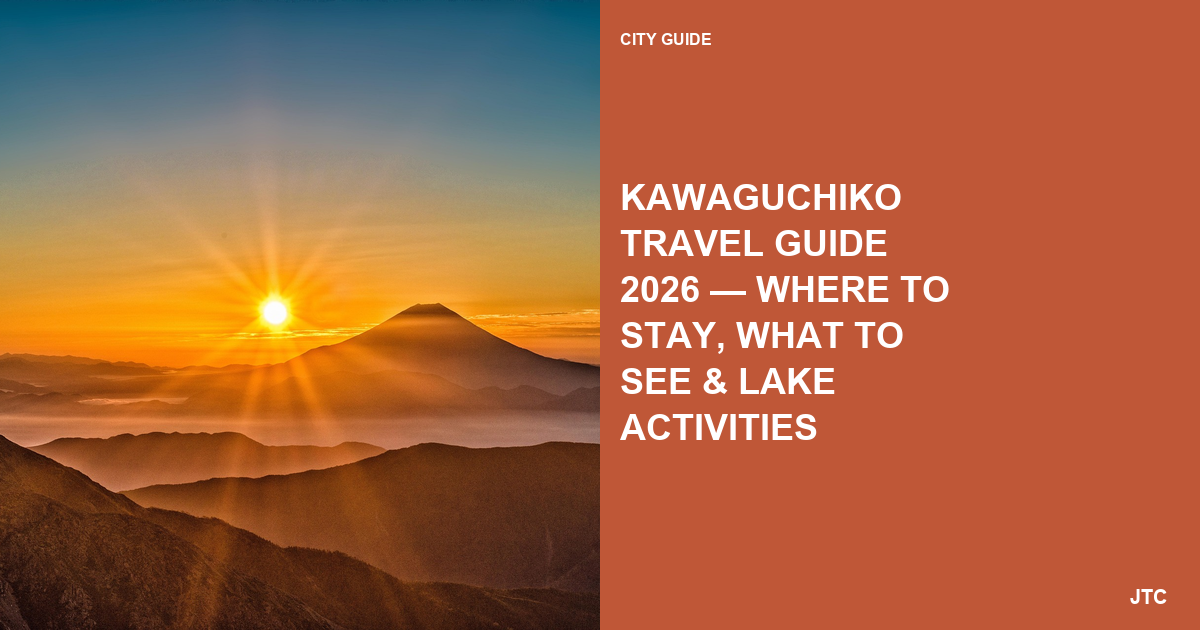
Kawaguchiko (河口湖) is the most visited of the Fuji Five Lakes, sitting at approximately 830 meters (about 2,700 feet) elevation on Mount Fuji’s northern flank. While not the largest lake in the group (that’s Yamanakako), it’s the most accessible and offers unobstructed views of the peak from its northern shores—conditions permitting, you’ll see the mountain reflected in glass-calm water on clear mornings.
The lake draws large numbers of visitors year-round, making it busier than its sister lakes (Yamanaka, Motosu, Sai, Shoji). But the crowds cluster in specific zones: the town of Kawaguchiko on the south shore (accommodation and transport hub) and the northern scenic overlooks. Early morning or midweek visits let you sidestep tourist density.
Most visitors treat Kawaguchiko as a day trip from Tokyo or a 1–2 night stop en route to Mount Fuji climbing or Hakone. The lake itself has no major hiking equivalent to Hakone’s caldera trails, but the lake town offers accessible activities: scenic cruises, hot spring bathing, museum visits, and Mount Fuji photography.
Key Features & Top Highlights
1. Mount Fuji Views from the North Shore
The northern bank near Kawaguchiko town yields the clearest Mount Fuji sightlines. From Kachi-Kachi Ropeway (cable car), the 1,075-meter summit gazes directly at Mount Fuji’s snowy cone—approximately 12 km away. On transparent mornings (typically April–May and October–November), the view rivals paid observation decks elsewhere in Japan.
The lake’s surface acts as a mirror on still days, doubling the peak’s visual impact. Water clarity depends on weather: rainy days create fog; afternoon sun bounces water haze upward. Plan photography for early morning (6:00–9:00 AM) when light is soft and air clearest.
2. Kachi-Kachi Ropeway & Foot Bath
The Kachi-Kachi Ropeway (カチカチ山ロープウェイ, now officially branded as Mt. Fuji Panoramic Ropeway) ascends Mt. Tenjo (天上山, 1,075m) in about 3 minutes, offering panoramic views of Lake Kawaguchiko and Mount Fuji from the observation deck at the top. The ropeway runs year-round (weather permitting). Access from Kawaguchiko town center takes about 10 minutes by local bus.
At the summit, there’s a small observation area and a foot bath (足湯) where you can soak your feet while enjoying the view — a nice break but not a full onsen experience. The Kachi-Kachi (Mt Fuji Panoramic) Ropeway roundtrip costs ¥1,000 for adults and ¥500 for children (one way: ¥600 / ¥300, as of 2026). Operating hours: 8:30 AM – 5:00 PM (extended to 6:00 PM during summer holidays). Departures every 5–10 minutes. Weather-dependent closures may occur. Verify current pricing at the official Mt. Fuji Panoramic Ropeway website.
Timing tip: Visit early morning (before 9:00 AM) for the clearest Fuji views and to avoid tour group crowds. Late afternoon can also offer nice light, but clouds tend to build up as the day progresses.
3. Kawaguchiko Cruise (Lake Boat Tour)
A sightseeing cruise departs from the lakeside pier multiple times daily. The boat circles the lake, passing scenic viewpoints and offering Mount Fuji photo opportunities from the water. Cruise duration is typically around 20–30 minutes.
Cruise costs are approximately ¥1,000 per person (check current pricing and schedules at the pier or the Fuji Goko Kisen website). The experience is best on clear days when Fuji is visible; on hazy or cloudy days, the lake views are still pleasant but the main draw is diminished. Departure schedules vary by season.
4. Chureito Pagoda & Sengen Park
This five-story red pagoda sits atop a hillside in nearby Fujiyoshida (about 10–15 minutes from Kawaguchiko Station, near Shimoyoshida Station on the Fujikyu Line). A climb of roughly 400 steps leads to the pagoda, which frames Mount Fuji perfectly in the background — it’s one of Japan’s most-photographed Mount Fuji viewpoints, particularly when cherry blossoms blanket the hillside (typically late March–early April).
Sengen Park surrounds the pagoda, offering year-round seasonal flowers: plum (February), cherry (March–April), azalea (April–May), and red foliage (October–November). Entry to the park is free. Parking (50 spots) fills by 10:00 AM on weekends; arrive early or use off-peak days.
5. Kawaguchiko Town & Souvenir Shopping
The lake’s main town clusters around the train station and port area, stretching roughly 1.5 km along the southern shore. It hosts ryokans (traditional inns), hotels, casual restaurants, and souvenir shops. The town itself holds no major attractions but serves as the logistical anchor for lake access.
Key shops: Kawaguchiko Station building houses local crafts and Mount Fuji merchandise (5th floor); Lake Kawaguchiko Museum (comprehensive lakeside ecology exhibit, ¥500 entry) sits on the north bank; the Ropeway Station area has ice cream and snack vendors.
Restaurants concentrate near the station and port: udon (noodles), soba, and fresh fish dishes dominate the menu. Lunch averages ¥1,200–¥2,500 per person.
2026 new openings worth a look: Musu Kawaguchiko (chawanmushi-egg-custard specialty restaurant, opened May 2026) and Da Pansù (Italian restaurant, opened January 2026) — both within walking distance of the lake.
6. Saiko & Motosu Lake Excursions
Kawaguchiko is the Fuji Five Lakes’ primary hub, so accessing the quieter sibling lakes is straightforward. Saiko (西湖, West Lake) lies just 5–8 km west of Kawaguchiko and is one of the quieter lakes in the group. A short 15–20 minute drive or local bus ride connects the two.
Saiko’s main draw is the absence of crowds and a short hiking trail (2 hours) around its perimeter. Motosu (north) offers fishing and campgrounds but minimal tourist infrastructure.
7. Nearby Hot Springs (Onsen)
The Kawaguchiko area has several hot spring facilities where you can relax after a day of sightseeing. Many ryokans (traditional inns) include onsen access as part of your stay, and some standalone facilities are open to day visitors. Look for “日帰り温泉” (higaeri onsen / day-use hot spring) signs near the lake.
Soaking in a hot spring with Mount Fuji in view — weather permitting — is one of the Kawaguchiko area’s most memorable experiences. Day-use onsen fees typically range from ¥800–¥1,500 per person.
🎫 Quick Recommendation
We recommend booking a highlights tour on your first day — it helps you get oriented and covers the major spots efficiently.
Pricing & Cost Breakdown
Kawaguchiko is budget-friendly for a lakeside Japan destination. Here’s a realistic cost estimate for a 1-day visit (per person, April 2026):
| Category | Budget Option | Mid-Range | Premium |
|---|---|---|---|
| Transport (Tokyo → Kawaguchiko return) | ~¥4,600 (bus) | ~¥4,600 (bus) | ~¥8,000 (train) |
| Kachi-Kachi Ropeway (roundtrip) | ¥1,000 | ¥1,000 | ¥1,000 |
| Lake Cruise | ¥1,000 | ¥1,500 | ¥1,500 |
| Local Sightseeing Bus (1-day pass) | ¥1,300 | ¥1,500 | ¥2,500 |
| Meals (2 meals) | ¥2,000 | ¥3,500 | ¥6,000 |
| Miscellaneous (snacks, museum) | ¥500 | ¥1,000 | ¥2,000 |
| Daily Total (Day Trip) | ¥10,400 | ¥13,100 | ¥21,000 |
Overnight Stay Costs (2026): Hostels and dorm-style stays start at ¥4,500 per bed (limited availability). Standard budget ryokans run ¥8,000–¥10,000 per person. Mid-range hotels (Japanese-style rooms with lake views) run ¥12,000–¥18,000 per person with two meals included. Premium resorts with private baths and kaiseki dinners reach ¥30,000–¥45,000 per person.
Note (2026): Fujikawaguchiko and Fujiyoshida municipalities are introducing a lodging tax (estimated ¥200–¥500 per night per person). The exact amount and start date are pending official announcement. Confirm with your hotel when booking.
Ready to plan your Kawaguchiko trip?
- Book your bus or train ticket —
- Reserve accommodation —
- Get ropeway and activity tickets —
Pros & Cons
Pros
- Closest Mount Fuji views: The northern overlooks deliver unobstructed sightlines to the peak—no hills or trees intervene.
- Easy transport from Tokyo: Direct highway buses from Shinjuku run frequently (~2 hours); the “Fuji Excursion” limited express train also offers a direct option (~2 hours). Feasible as a day trip.
- Year-round access: Unlike mountain climbing, the lake has no seasonal restrictions. Even winter visits work (though Mount Fuji visibility drops).
- Compact activities: Ropeway rides, lake cruises, and pagoda walks don’t require endurance hiking or specialized skills.
- Ryokan culture: Multiple traditional inns offer authentic overnight experiences at reasonable prices (¥5,000–¥25,000 per person).
- Low-cost meals: Regional noodle dishes and fish-based cuisines average ¥1,000–¥2,000 per lunch, cheaper than Tokyo.
Cons
- Mount Fuji visibility is unreliable: Afternoon clouds, haze, and seasonal fog frequently obscure the peak. Early morning (6:00–8:00 AM) and autumn (October–November) improve odds, but no guarantee.
- Tourist crowding: Weekends and holidays (especially cherry blossom and autumn foliage seasons) pack the ropeway stations and overlooks with domestic tourists. Midweek visits yield calmer experiences.
- Limited hiking variety: Local trails around the lake are pleasant but modest — none compare to Hakone’s volcanic calderas or Mount Fuji’s climbing routes. Lake activities lean toward passive observation.
- Few nightlife options: Dining ends by 10:00 PM at most restaurants. The town lacks bars or entertainment venues; it’s a retire-early destination.
- Summer heat and humidity: July–August brings 30°C+ heat with high humidity. Indoor attractions (museums) and water activities (cruises) become priorities rather than outdoor sightseeing.
- Weather-dependent experience: A cloudy, rainy day strips Kawaguchiko of its signature Mount Fuji appeal. Activities become rote without the backdrop.
Best For & Not For
Best For
- First-time Japan visitors: Easy access from Tokyo, iconic Mount Fuji backdrop, traditional ryokan experience in one package.
- Photography enthusiasts: Chureito Pagoda, Kachi-Kachi views, and reflected water surfaces offer compelling compositions year-round.
- Families with young children: No strenuous hikes required; ropeway rides, lake cruises, and museum visits suit ages 5–12.
- Senior travelers: Low-impact activities, hot spring therapy, and comfortable ryokan amenities suit older guests.
- Short-stay visitors: 1–2 days suffice to hit main attractions; no need for extended trips.
- Budget travelers: Affordable accommodations, meals, and activities compared to Tokyo or Hakone.
Not For
- Serious hikers: If you want multi-hour mountain trekking, Hakone or Mount Fuji itself deliver more challenging terrain.
- Adventure sport seekers: Kayaking and sailing occur on the lake, but infrastructure is minimal. No skiing, rock climbing, or other action sports.
- Cultural deep-divers: Limited historical sites, temples, or museums. Kawaguchiko is scenery-focused, not culture-focused.
- Visitors planning escape from crowds: Main ropeway stations and scenic overlooks see constant tourist traffic on weekends.
- Summer travelers seeking cool weather: July–August heat and humidity are stifling. September or October are better choices.
How to Visit: Step-by-Step
1. Get There from Tokyo
By bus (most popular): Highway buses from Shinjuku Expressway Bus Terminal run directly to Kawaguchiko Station. Operators include Fujikyu and Keio Bus, with departures roughly every hour. Journey time is about 1 hour 45 minutes to 2.5 hours depending on traffic. Cost is approximately ¥2,300 one way (as of early 2026). This is the easiest option with no transfers needed — book in advance during peak seasons, as popular departure times sell out quickly.
By train: Take JR Chuo Line limited express “Azusa” or “Kaiji” from Shinjuku to Otsuki Station (~60 min), then transfer to the Fujikyu Railway line to Kawaguchiko Station (~50 min). There’s also a direct limited express “Fuji Excursion” (富士回遊) from Shinjuku to Kawaguchiko (about 2 hours, no transfer needed, ~¥4,000 one way including seat reservation fee). Book in advance — seats sell out during weekends and holidays.
If driving: Route 139/246 from central Tokyo covers 120 km and takes 2.5–3.5 hours depending on traffic. Parking at the lake’s main facilities costs ¥500–¥800 per day.
2. Arrange Local Transport
Kawaguchiko Station sits at the lake’s southern edge (town center). From here, local buses connect to Kachi-Kachi Ropeway (10 min) and Chureito Pagoda (20 min). A one-day local bus pass costs ¥1,300 and covers unlimited rides. Taxis are available but expensive (¥2,000+ per trip).
3. Choose Your Primary Activity (Morning)
Option A (Ropeway focus): 7:00 AM departure from hotel → 8:00–9:30 AM Kachi-Kachi Ropeway + hot spring bath → 11:00 AM descend.
Option B (Photography focus): 6:30 AM departure → 7:30–9:00 AM Chureito Pagoda hike and photos → 10:30 AM return.
Option C (Relaxed pace): 9:00 AM breakfast → 10:00–11:30 AM lake cruise → 1:00 PM lunch.
4. Midday Activities (Lunch & Afternoon)
Grab lunch near the station or port (udon, soba, fish). Afternoon options: Museum visit (1.5 hours), second ropeway ascent, souvenir shopping, or café time with lake views. If staying overnight, return to accommodation by 5:00 PM to prepare for dinner.
5. Evening (Sunset & Departure or Overnight)
Day-trip visitors: Depart station by 5:30 PM for evening train back to Tokyo (arrive 8:00–8:30 PM).
Overnight visitors: Check in to ryokan by 4:00 PM. Dinner is typically served 6:00–7:00 PM. Soak in the hot spring bath after dark for a quieter experience. Retire by 10:00 PM.
6. Next Morning (Overnight Guests)
Wake early (6:00–7:00 AM) for Mount Fuji viewing before clouds build. Many ryokans serve breakfast by 7:30 AM. Depart for Tokyo station by 9:00–10:00 AM to catch midday trains.
Common Mistakes to Avoid
Visiting without weather forecasts: Check the morning weather before committing to ropeway ascents or boat tours. Fog and clouds render views useless; reschedule if poor visibility is forecast.
Arriving late in the day: Mount Fuji clarity peaks in early morning (6:00–9:00 AM). Late afternoon and evening trips miss the sweet light and face obscured views from afternoon haze.
Skipping the Chureito Pagoda because it’s “touristy”: Yes, it’s crowded on weekends, but the composition (pagoda + peak + foreground flowers) is unmatched. Go on a weekday or early morning instead of avoiding it altogether.
Assuming one day trip covers “everything”: Kawaguchiko isn’t compressed enough for a true sampling of activities in 6 hours. Prioritize 2–3 activities over racing through all five ropeway/cruise options.
Visiting July–August without AC accommodation: Heat is brutal. Ensure your ryokan or hotel has air conditioning, or choose autumn dates instead.
Neglecting to book ropeway tickets in advance during holidays: Cherry blossom and New Year periods see long queues. Reserve online 1–2 days prior.
Taking a lake cruise as your primary activity: If Mount Fuji is cloud-covered, the cruise loses much of its appeal. Treat it as a secondary, not primary, activity.
Frequently Asked Questions
Q: What’s the best month to visit Kawaguchiko for Mount Fuji views?
A: October and November offer the clearest, most reliable sightlines. Autumn dry weather and low humidity minimize haze. April and May (spring, post-rain systems) are second-best. Avoid July–August due to summer haze and humidity. Paradoxically, winter (December–February) sees fewer clouds but higher snow obscures the peak’s base; Mount Fuji remains snow-free only above 2,500 m mid-winter.
Q: Can I reach Kawaguchiko in one day from Tokyo?
A: Yes. Fujisan Express from Shinjuku Station (2 hours each way) makes day trips feasible. Arrive by 8:30 AM, spend 5–6 hours on activities, depart by 5:00 PM. You’ll miss the ryokan experience and evening Mount Fuji viewing, but main attractions fit into this window.
Q: Is Kawaguchiko worth visiting if Mount Fuji isn’t visible?
A: Partially. The ropeway views of surrounding mountains, forest, and five-lake panoramas remain scenic. The hot spring bath is worthwhile standalone. But the lake cruise and Chureito Pagoda lose much of their appeal without the peak visible. If cloud cover persists, consider Hakone or an extended mountain walk instead.
Q: How long should I stay in Kawaguchiko?
A: 1–2 nights is optimal. One night allows a morning Mount Fuji viewing session, one activity (ropeway, cruise, or pagoda), and a relaxed dinner. A second night lets you explore a second activity and revisit overlooks if morning conditions were poor. Longer stays offer diminishing returns unless you plan day trips to Hakone or other Fuji Five Lakes.
Q: Is Kawaguchiko accessible by car without tolls?
A: No. Route 139 to Kawaguchiko intersects the Chuo Expressway and Fuji Subaru Line, both toll roads. Expect ¥2,500–¥4,000 in toll fees round-trip from Tokyo, plus parking (¥500–¥800/day). Public transport is cheaper and stress-free if you don’t need a rental car for other destinations.
Final Recommendation
Book your Mount Fuji lake escape now. Kawaguchiko’s combination of effortless Tokyo access, authentic ryokan hospitality, and unobstructed peak views makes it Japan’s best one-night lakeside getaway. Morning light on the snowy cone reflected in glass water is a memory that justifies the trip alone.
Ready for your Kawaguchiko adventure Check availability and book your stay with Klook’s trusted partners—save up to 15% with instant confirmations and 24-hour cancellation.
Related Articles
- Hakone Travel Guide: Hot Springs, Views & Day Trips from Tokyo
- Mount Fuji Travel Guide: Climbing Routes, Tours & Essential Tips
- Complete Japan Itinerary: 7–10 Days Covering Top Destinations
- Japan Travel Guide Hub — The complete planning hub — every guide, every city, every step of the trip.
Still have questions about your Japan trip?
Ask Japan Travel Concierge AI — instant answers on transportation, food, customs, and what to do when something goes wrong.

Comments