Price Disclaimer: All prices in this guide are approximate as of early 2026. Fares, admission fees, and accommodation rates change regularly—always confirm the latest prices on the official provider’s website before booking. Prices may have changed since publication.
Quick Summary
- Best for: Street food, nightlife, day trips to Kyoto/Kobe, budget travelers
- Main neighborhoods: Dotonbori, Shinsekai, Umeda, Namba, Nakatsu
- Must-do: Osaka Castle, Okonomiyaki in Shinsekai, street food crawl
- Budget per day: ¥6,000–¥12,000 ($40–$80 USD) for food and activities
- Getting around: Osaka Metro (rechargeable IC card ¥2,000–¥3,000)
- Stay duration: 2–4 days ideal; can be day trip from Kyoto
Overview of Osaka
Osaka is one of Japan’s largest cities and the gateway to the Kansai region. Known as “Japan’s kitchen,” it’s widely considered the country’s street food capital—okonomiyaki, takoyaki, and kushikatsu are life here, not just snacks. Unlike Kyoto’s temples or Tokyo’s corporate polish, Osaka vibrates with working-class energy, cheerful disorder, and locals who shout greetings across packed izakayas.
First-time visitors often skip Osaka in favor of Kyoto or Tokyo. This is a mistake. Osaka offers authentic Japan without the tourist infrastructure—cheaper, messier, and more fun. The city is compact enough to navigate by train but large enough that you won’t see it all in two days. Most visitors stay 2–4 days or use it as a base for day trips to Kyoto (75 minutes by train) and Kobe (30 minutes).
🎫 Quick Recommendation
We recommend booking a highlights tour on your first day — it helps you get oriented and covers the major spots efficiently.
Top Highlights & Must-Do Experiences
1. Dotonbori: Neon, Food, and Controlled Chaos
Dotonbori is Osaka’s most famous neighborhood and the epicenter of street food culture. A 3-block canal-side district packed with restaurants, shops, and neon signs, it’s overwhelming on first arrival—but that’s the point. The massive mechanical crab, the Glico Running Man neon sign, and thousands of visitors create sensory overload in the best way.
Eat takoyaki (octopus balls) from a street stall for approximately ¥500–¥700. Try okonomiyaki at Mizuno or Kiji—expect to wait 30–60 minutes during peak hours. Walk the canal at night when neon reflections turn the water into a mirror. Allow 2–3 hours minimum.
2. Osaka Castle: History and City Views
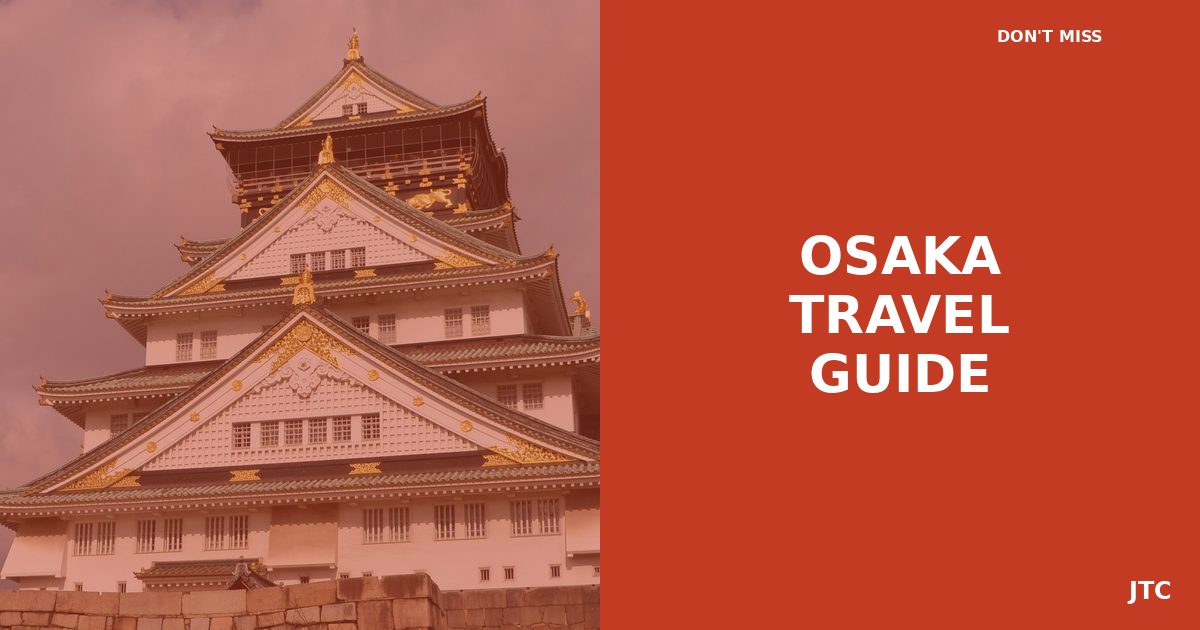
Built in 1583, repeatedly destroyed and rebuilt—the current structure dates to 1931 with modern reconstruction. The interior is a museum covering samurai history. Admission: approximately ¥1,200 (about $8 USD) for adults; high school and university students ¥600; junior high school students and younger are free (price raised from ¥600 in April 2025). The castle grounds include Osaka Castle Park (free, beautiful in cherry blossom season). Allow 2–3 hours total. Take the Osaka Loop Line to Osakajokuen Station.
3. Shinsekai: Vintage Vibes and Kushikatsu Alley
Shinsekai is Osaka’s most atmospheric neighborhood—narrow alleys lined with kushikatsu restaurants, vintage pachinko parlors, and red-lantern izakayas. Developed in 1912, it retains a time-warp feel. Eat kushikatsu at Kushikatsu Daruma (approximately ¥2,000–¥3,500 per person) or order skewers for approximately ¥80–¥200 each. The “one sauce, multiple dips” rule applies—dip each piece only once.
4. Umeda: Shopping, Dining, and Sky Views
Umeda is Osaka’s upscale neighborhood. The Umeda Sky Building’s Kuchu Teien Observatory (“Floating Garden”) is one of Osaka’s best skyline spots. Tickets are approximately ¥2,000 for adults and ¥500 for children (ages 4 through elementary school). Take the elevator to the 39th floor, then ride the dramatic open-air escalator to the rooftop observatory.
5. Nakatsu & Harukoma Sushi: Casual Dining Excellence
Nakatsu is a neighborhood north of Umeda filled with casual eateries. Harukoma Sushi (conveyor belt sushi) is famous for high quality at low prices (approximately ¥1,200–¥1,800 for lunch). Plates start at approximately ¥162 each. No reservations—expect 15–30 minute waits during peak hours. Fewer tourists than Dotonbori.
6. Kuromon Market: Fresh Produce and Seafood
A covered market 5 minutes from Dotonbori, with food stalls operating in the area since the 1820s (officially recognized as a market in 1902). Buy fresh sea urchin, oysters, or tuna for approximately ¥500–¥1,500 and eat standing up. Most shops open 9:00 AM–6:00 PM; some stalls close on Sundays or public holidays, but the market itself operates daily. Allow 1 hour.
Pricing & Cost Breakdown
Osaka is significantly cheaper than Tokyo or Kyoto:
- Accommodation: Budget hotels/hostels approximately ¥2,500–¥4,500/night; mid-range approximately ¥6,000–¥12,000; business hotels approximately ¥5,000–¥8,000
- Food (per day): Street food only approximately ¥1,500–¥2,500; mix of street + sit-down approximately ¥3,000–¥6,000
- Transport: Rechargeable IC card approximately ¥2,000–¥3,000 (single ride approximately ¥200–¥300); day pass approximately ¥1,100
- Attractions: Osaka Castle approximately ¥1,200 (adults); Umeda Sky Building Kuchu Teien Observatory approximately ¥2,000 adults / ¥500 children; Sumiyoshi Taisha FREE
- Total per day (budget): approximately ¥6,000–¥12,000 ($40–$80 USD)
Money tip: Cashless payment (credit cards, IC cards, QR codes) is widely accepted in Osaka’s major areas, though smaller shops, street food stalls, and some traditional establishments still prefer cash. Convenience stores (FamilyMart, Lawson, 7-Eleven) have ATMs accepting foreign cards if you need yen.
Osaka Lodging Tax (revised September 2025): Osaka Prefecture charges a per-person, per-night accommodation tax based on room price — approximately ¥200 for stays of ¥7,000 to under ¥15,000, ¥500 for ¥15,000 to under ¥20,000, and ¥1,000 for ¥20,000 and above. Rooms under ¥7,000 (most hostels and budget capsule hotels) are exempt. The tax is collected separately at check-in (not included in the booking total).
Pros and Cons
Pros
- Food culture unmatched: Every meal is an experience
- Authentic, unpretentious: No tourist facades; locals are direct and friendly
- Affordable: 20–30% cheaper than Tokyo or Kyoto
- Compact and navigable: Main neighborhoods within 15 minutes by train
- Gateway location: 75 minutes to Kyoto, 30 minutes to Kobe
- Nightlife: Izakayas, karaoke, and clubs cater to locals first
Cons
- Language barrier: Fewer English signs than Tokyo
- Crowding in certain areas: Dotonbori packed 6–9 PM
- Less “picture-perfect”: Fewer Instagram moments than Kyoto temples
- Weather: Humid summers; occasional typhoons
Best For / Not For
Best For
- First-time visitors who want authentic street food and working-class culture
- Budget travelers
- Foodies who live to eat
- Travelers seeking nightlife and izakaya culture
- Those planning multi-city trips (gateway to Kyoto, Kobe, Hiroshima)
Not For
- Temple and shrine pilgrims (Kyoto is better)
- Visitors seeking quiet, orderly experiences
- Those uncomfortable with crowds and noise
- Visitors needing heavy English signage
How to Visit Osaka
Getting There
By air: Kansai International Airport (KIX). The Haruka Express now runs direct to Osaka Station via the new Umekita underground platforms (~46 minutes, approximately ¥2,330 reserved seat; service opened March 2023). For Kyoto, the same train continues for a total of ~75 minutes (¥2,850 reserved seat). Airport limousine buses serve Namba (~50–60 minutes, approximately ¥1,300) and other hubs.
By train: Shinkansen to Shin-Osaka Station (about 2 hours 30 minutes from Tokyo via Nozomi, approximately ¥14,720 reserved seat; Hikari/Kodama non-reserved approximately ¥13,870; fares revised March 2024).
Getting Around
Osaka Metro has 8 lines. Buy a rechargeable ICOCA card (approximately ¥2,000, approximately ¥1,500 usable). Day pass (approximately ¥1,100) pays for itself after 4+ rides. Trains run 5:30 AM–midnight. For more details, see Osaka subway guide.
Where to Stay
Dotonbori/Namba: Center of action; noisier at night. approximately ¥3,500–¥8,000/night.
Umeda: More upscale; quieter. approximately ¥5,000–¥10,000/night.
Nakatsu: Hidden gem; fewer tourists. approximately ¥3,000–¥6,000/night.
Common Mistakes to Avoid
- Skipping Osaka because “it’s not pretty”: Osaka’s appeal is cultural and culinary, not aesthetic.
- Eating only at chain restaurants: Hit local counters and stalls instead.
- Only staying in Dotonbori: Experience Shinsekai, Nakatsu, or Umeda for balance.
- Visiting Dotonbori during peak hours (6–9 PM): Go at lunch or late night.
- Not having cash: Bring approximately ¥20,000+ in yen.
- Trying to see everything in one day: Spend 2–3 days minimum.
Frequently Asked Questions
How many days should I spend in Osaka?
2–4 days is ideal. Day 1 covers Dotonbori. Day 2 covers castle and Shinsekai. Day 3 is for day trips or exploring other neighborhoods.
Is Osaka safe for solo travelers?
Yes, very safe. Violent crime is rare. Keep bags zipped in crowded areas.
What’s the best time to visit Osaka?
Spring (March–April) and fall (September–November) are ideal. Avoid Golden Week and New Year.
Do I need a Japan Rail Pass?
Not for Osaka city travel. A JR Pass makes sense if visiting multiple regions.
Can I eat okonomiyaki with dietary restrictions?
Vegetarian: request “nashi” (no meat). Vegan is harder; ask for “yasai dake” (vegetables only), but many dishes contain dashi (fish broth). Bring a translation card listing your allergies.
Final Recommendation
Don’t skip Osaka. This is where real Japan lives. Book accommodation in a neighborhood that matches your vibe—Dotonbori for chaos, Nakatsu for local flavor, Umeda for comfort—and spend at least 2 days eating, walking, and soaking in the energy.
Related Articles
- Best Tours in Osaka
- Tokyo Travel Guide
- Kyoto Travel Guide
- Japan Travel Guide Hub — The complete planning hub — every guide, every city, every step of the trip.
Still have questions about your Japan trip?
Ask Japan Travel Concierge AI — instant answers on transportation, food, customs, and what to do when something goes wrong.


Comments