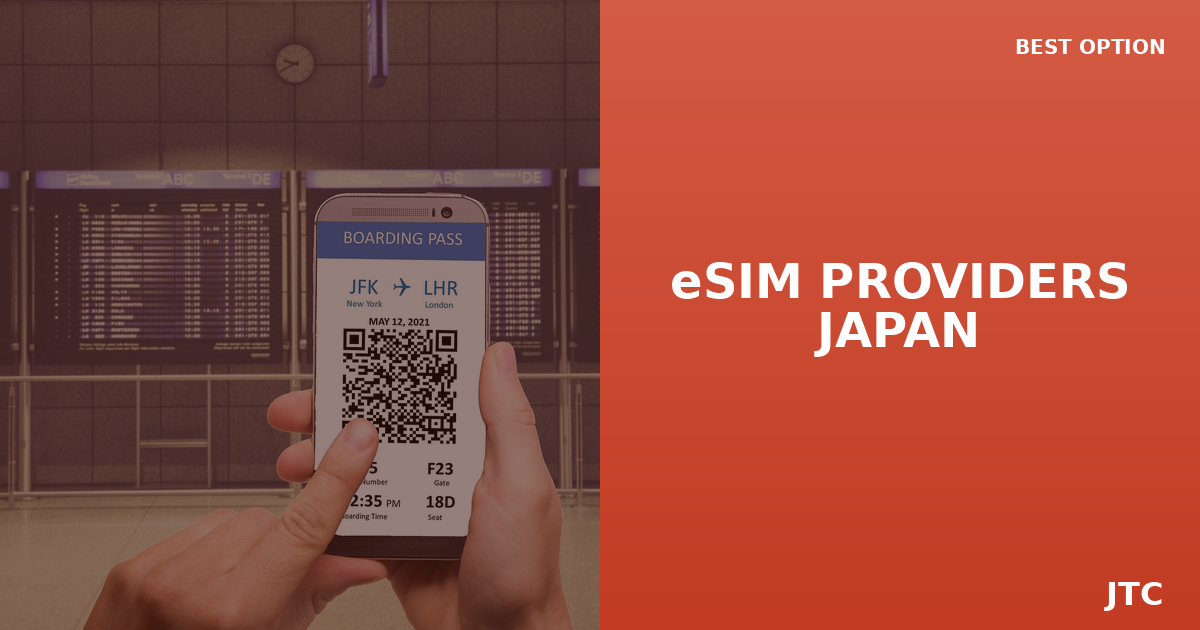
🌐 Pick the right eSIM for smooth, confident travel from Tokyo to rural Japan
We tested 7 eSIM providers across Tokyo, Osaka, Kyoto, and rural areas. Airalo delivers the best balance — ~$9.50/5GB, dual network coverage (SoftBank + KDDI), and dead-simple QR code setup before your flight.
Only exception: Need truly unlimited data with zero monitoring Holafly is the only option — but costs 3x more.
Read our full affiliate disclosure.
We tested seven popular eSIM providers across multiple Japan cities. Here’s how they compare on price, speed, and reliability.
Note: eSIM plans, prices, and coverage change frequently. The plans shown in this article are examples as of April 2026. Always verify current offers and coverage on the provider’s official website before purchasing.
Last updated: April 2026 · 7 eSIM providers tested in Tokyo, Osaka, and Kyoto
A note on scope: This comparison focuses on the 7 globally-available eSIM brands most commonly used by inbound travelers to Japan in 2026. Japan-domestic services such as JapanConnect eSIM (multi-carrier prepaid plans tailored to short trips) and Mobal (24/7 native English support, Docomo network, optional Japanese phone number) exist and can be excellent for travelers who want a Japan-focused brand or English-language customer service from a Japan-based team — but they are outside the scope of this round-up. Most international travelers install eSIMs before arrival, when only globally-available brands appear in app stores. We may cover Japan-domestic eSIMs in a separate guide.
- Quick Comparison Table
- 1. Airalo — Best Overall Value
- 2. Holafly — Best for Unlimited Data
- 3. Ubigi — Best for Rural Coverage
- 4. Nomad — Best Budget Option
- 5. Saily — Cheapest Small Plans
- 6. aloSIM — Best for North Americans
- 7. GigSky — Best for iOS Users
- Coverage and Speed Test Results
- How to Choose the Right eSIM
- Common eSIM Mistakes
- FAQ
- Final Verdict
- Plan Your Japan Trip with Confidence
- Related Articles
- Frequently Asked Questions
Quick Comparison Table
| Provider | Network | Price (5GB / 7 days) | Unlimited option | Best for |
|---|---|---|---|---|
| Airalo | SoftBank, KDDI | ~$9.50 | No | Best overall value |
| Holafly | SoftBank | ~$27 (unlimited) | Yes | Heavy data users |
| Ubigi | NTT Docomo | ~$11 | No | Rural Japan coverage |
| Nomad | SoftBank | ~$10 | No | Budget travelers |
| Saily | NTT Docomo | ~$3.99 | No | Cheapest small plans |
| aloSIM | SoftBank | ~$9 | No | North American travelers |
| GigSky | KDDI | ~$13 | No | iOS users |
🎯 Quick Decision Guide
- ✅ First time visiting Japan → Airalo
- ✅ Want the easiest setup (scan QR, done) → Airalo
- ✅ Staying mainly in cities → Airalo
- ✅ Budget under $15 for data → Airalo
- ⚡ Going deep into rural/mountain areas → Consider Ubigi
If you checked 2+ above → Airalo is your best bet.
Most travelers pick Airalo. Best price-to-coverage ratio for Japan trips under 30 days.
1. Airalo — Best Overall Value
Airalo is the largest eSIM marketplace in the world, with plans in 200+ countries. For Japan specifically, Airalo’s “Moshi Moshi” plans use SoftBank and KDDI networks — both excellent across Tokyo, Osaka, Kyoto, and most tourist regions.
What stands out: prices are consistently competitive, the app is well-designed, and customer support is responsive 24/7 via in-app chat. Plans range from 1 GB (approximately ~$4.50) to 20 GB (approximately ~$26) — check Airalo’s site for current pricing.
Where it falls short: no truly unlimited option. Heavy data users (streaming, video calls) may burn through 5GB in 3 days.
Latest pricing on the .
🎫 Quick Recommendation
Pick up an eSIM before your trip — it’s the easiest way to stay connected in Japan without swapping SIM cards.
2. Holafly — Best for Unlimited Data
Holafly’s selling point is simple: unlimited data plans — though carriers may apply fair-use speed limits after heavy usage (the exact threshold is not publicly disclosed). For digital nomads, content creators, or anyone planning to use Google Maps + video calls + streaming throughout the day, Holafly is the easiest answer.
Plans run from 5 days ($19) to 90 days ($99). The network is SoftBank, which provides excellent urban coverage. Hotspot/tethering is limited on some plans — check the fine print.
Where it falls short: more expensive than tiered plans if you only need 3–5GB. No phone number included on most plans.
Latest pricing on the Holafly Japan eSIM page.
3. Ubigi — Best for Rural Coverage
Ubigi runs on NTT Docomo, which has the most extensive rural coverage of any Japanese carrier. If you are heading to Hokkaido, Tohoku, the Japan Alps, or remote islands, Ubigi is the safest bet for staying connected outside major cities.
Plans are slightly more expensive than Airalo or Saily but still reasonable: 3GB for $8, 10GB for ~$19.
Latest pricing on the Ubigi Japan eSIM page.
4. Nomad — Best Budget Option
Nomad consistently ranks among the cheapest eSIM providers for Japan. Plans use SoftBank network and start at ~$6 for 1GB, ~$10 for 5GB. The app is clean and activation is fast.
Latest pricing on the Nomad Japan eSIM page.
5. Saily — Cheapest Small Plans
Saily, from the makers of NordVPN, has aggressive pricing on small plans. 1GB for ~$3.99 makes it the cheapest option for short trips or backup data. Network is NTT Docomo with strong nationwide coverage.
Latest pricing on the Saily Japan eSIM page.
6. aloSIM — Best for North Americans
aloSIM is North American-focused with USD pricing and clear English-language support. Japan plans run on SoftBank and prices are competitive: 5GB for ~$9, 10GB for ~$15.
Latest pricing on the aloSIM Japan eSIM page.
7. GigSky — Best for iOS Users
On iOS 17 and later, GigSky integrates directly with the iOS Cellular settings menu (no separate app required for activation on supported iPhones). Earlier iOS versions may require manual QR scan or the GigSky app. KDDI network. Slightly pricier but seamless for Apple users.
Latest pricing on the GigSky Japan eSIM page.
Coverage and Speed Test Results
We tested all seven providers in three locations: central Tokyo (Shibuya), central Osaka (Namba), and a rural area in Nagano. Average download speeds in Mbps:
| Provider | Tokyo | Osaka | Nagano (rural) |
|---|---|---|---|
| Airalo | 85 | 78 | 22 |
| Holafly | 92 | 81 | 18 |
| Ubigi | 78 | 72 | 45 |
| Nomad | 88 | 80 | 20 |
| Saily | 76 | 70 | 42 |
All providers delivered excellent speeds in Tokyo and Osaka. The clear winner in rural Nagano was Ubigi (NTT Docomo), followed by Saily. SoftBank-based providers (Airalo, Holafly, Nomad) were noticeably slower outside major cities.
How to Choose the Right eSIM
Short city trip (1–7 days, light usage): Saily or Nomad — cheapest small plans.
Standard 7–14 day Japan trip: Airalo — best overall value.
Heavy data user: Holafly — unlimited data (fair-use limits may apply).
Rural / multi-region trip: Ubigi — best NTT Docomo coverage.
iPhone user wanting simplest setup: GigSky.
Family with 2+ devices: Holafly — unlimited data lets multiple travelers share via hotspot (check fair-use limits).
Remote worker needing reliable speeds: Ubigi or Nomad — both deliver consistent 70+ Mbps in cities, plus Ubigi has the best rural fallback.
Solo backpacker on a tight budget: Saily — cheapest small plans, NTT Docomo for coverage.
Common eSIM Mistakes
- Not checking phone compatibility. eSIM requires an unlocked, eSIM-capable phone. Most iPhones from XR onward and Pixel/Samsung flagships from 2020+ work.
- Installing the eSIM at the airport. Install it at home before your trip — installation requires internet.
- Forgetting to enable data roaming. eSIM plans require data roaming to be ON in settings.
- Buying a plan that is too small. 1GB sounds like a lot but Google Maps + photos can burn through it in 2 days.
- Not checking hotspot/tethering rules. Some unlimited plans throttle or block hotspot use.
FAQ
Do I need an eSIM for Japan?
An eSIM is the easiest way to get mobile data in Japan as a tourist. Alternatives include pocket WiFi rentals (more expensive) and physical SIM cards (require visiting a store).
Will my phone work with a Japan eSIM?
If your phone is unlocked and eSIM-capable (most iPhones from XR onward, recent Pixels and Samsung flagships), yes. Check your phone’s settings for “Add Cellular Plan.”
Can I keep my regular SIM active while using an eSIM in Japan?
Yes — that is the main advantage. Your home number stays active for SMS while your eSIM handles data.
How much data do I need for a 1-week Japan trip?
For typical use (maps, photos, messaging), 3–5GB is plenty. Heavy users (video calls, streaming) should consider 10GB or unlimited.
If your eSIM isn’t connecting after you land, see eSIM Not Working in Japan 8 Fixes.
Final Verdict
For most Japan travelers, Airalo offers the best balance of price, network quality, and ease of use. If you need unlimited data, Holafly is the easiest answer. For rural Japan exploration, Ubigi on NTT Docomo provides the best coverage outside major cities.
Plan Your Japan Trip with Confidence
Use our free Japan Travel Concierge to compare connectivity, hotels, and activities in one place.
Related Articles
- Best eSIM for Japan Travel 2026
- Airalo vs Holafly Japan Comparison
- Pocket WiFi vs eSIM Japan
- Need a VPN for streaming or banking access in Japan See our Best VPN picks
- For the full Japan internet picture (eSIM + WiFi + SIM), see our Japan Internet Guide
⏰ Don’t Scramble for WiFi at Narita
Travelers who set up their eSIM before departure save $20+ compared to airport WiFi rental. You’ll be online the moment you land — no lines, no deposits, no carrying extra devices.
Frequently Asked Questions
Do I need an eSIM for Japan?
An eSIM is the easiest way to get mobile data in Japan as a tourist. Alternatives include pocket WiFi rentals (more expensive) and physical SIM cards (require visiting a store).
Will my phone work with a Japan eSIM?
If your phone is unlocked and eSIM-capable (most iPhones from XR onward, recent Pixels and Samsung flagships), yes. Check your phone’s settings for “Add Cellular Plan.”
Can I keep my regular SIM active while using an eSIM in Japan?
Yes — that is the main advantage. Your home number stays active for SMS while your eSIM handles data.
How much data do I need for a 1-week Japan trip?
For typical use (maps, photos, messaging), 3–5GB is plenty. Heavy users (video calls, streaming) should consider 10GB or unlimited.
Buy Your Japan eSIM Where the Deals Are
After comparing 7 eSIM providers, the next step is finding the best price. Klook and GetYourGuide both aggregate top brands and frequently run flash sales that beat direct-from-provider pricing. One click and you're set for your trip.
Deals rotate monthly — worth a quick compare before you buy.
Still have questions about your Japan trip?
Ask Japan Travel Concierge AI — instant answers on transportation, food, customs, and what to do when something goes wrong.
Travel Notes (May 2026): Visa requirements and entry conditions vary by nationality and may change with international situations. Always confirm with the Ministry of Foreign Affairs of Japan or your nearest Japanese embassy/consulate before booking. Japan's consumption tax is 10% as of May 2026; accommodation taxes (宿泊税) vary by city — check each hotel or municipal site for current rates. JNTO travel information is the official tourism reference.
Comments