Note: Prices and availability change frequently. The prices shown in this article are examples as of April 2026. Always verify the latest prices and details on the official provider’s website before booking.
Quick Summary
Everything you need to know about best tours in kyoto for your Japan trip. Read the quick highlights below or scroll for the full guide.
- Introduction
- Kyoto Tour Categories at a Glance
- Best Kyoto Tours by Category
- Pricing Overview
- Pros and Cons of Guided Tours in Kyoto
- Who Should Book Tours in Kyoto?
- How to Book Kyoto Tours
- Common Mistakes When Booking Kyoto Tours
- Frequently Asked Questions
- How to Choose: Quick Decision Guide
- Conclusion
- Related Articles
Introduction
Who this guide is for: First-time visitors planning 1-3 days in Kyoto who want to choose the right tours without overspending or wasting time on tourist traps.
Kyoto packs over 2,000 temples and shrines into a walkable basin surrounded by mountains, and the challenge isn’t finding things to see — it’s choosing which ones deserve your limited time. A guided tour solves this problem by connecting the right sites in the right order, adding cultural context that transforms a photo-op into an actual understanding of Japanese history.
The city divides naturally into districts: Higashiyama (eastern temples), Arashiyama (bamboo and riverside), Gion (geisha culture), and the northwest cluster (Kinkaku-ji, Ryoan-ji). Most first-time visitors spend 2-3 full days here, and booking 1-2 guided experiences alongside self-exploration produces the best results.
This guide covers Kyoto’s top tours by category, with specific prices, meeting points, and platform recommendations based on current availability across Klook, GetYourGuide, and Viator.
Best for most travelers: Klook for Kyoto tours
Competitive prices on temple combo passes and guided experiences with instant mobile vouchers.
Kyoto Tour Categories at a Glance
Kyoto tours cluster into seven categories: temple and shrine walks, geisha district tours, food and market tours, tea ceremony and cultural experiences, Arashiyama area tours, day trips to Nara and Uji, and cycling tours. Prices range from free (tip-based walking tours) to approximately ¥20,000 for premium all-day private guides.
🎫 Quick Recommendation
Want to make the most of your time A guided tour covers more ground and gives you insider tips you won’t find online.
Best Kyoto Tours by Category
Temple & Shrine Walking Tours
Higashiyama walking tours (approximately ¥4,000-8,000) cover the most scenic 3 km stretch in Kyoto: Kiyomizu-dera Temple, Sannenzaka and Ninenzaka slopes, Kodai-ji Temple, and Yasaka Shrine. Most tours meet at Gojo-zaka bus stop or Keihan Kiyomizu-Gojo Station and run 3-4 hours in the morning before peak crowds.
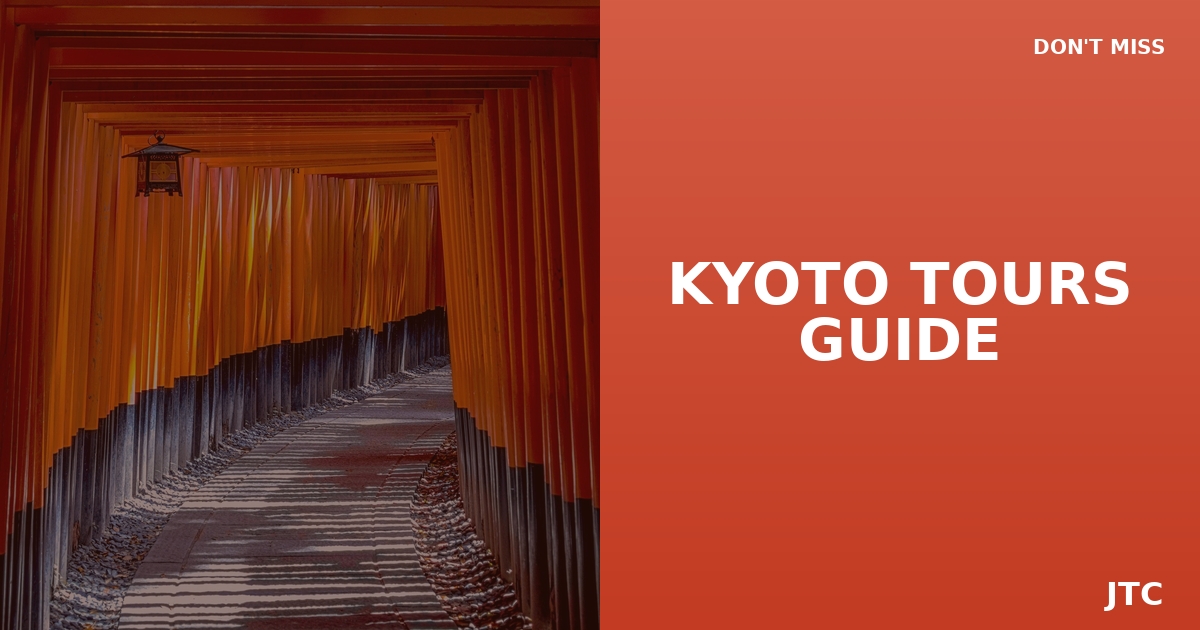
Kinkaku-ji (Golden Pavilion) and Ryoan-ji combination tours (approximately ¥5,000-9,000) explore the northwest district. A guide explains why Ryoan-ji’s 15 rocks are arranged so you can never see all of them from any single angle — context you’d completely miss on your own. Fushimi Inari’s 10,000 vermillion torii gates deserve a guided 2-hour hike (approximately ¥3,500-6,000) to reach the summit viewpoint most tourists skip, starting at JR Inari Station.
Geisha District & Gion Tours
Gion evening walking tours (approximately ¥5,000-10,000) operate from 5:00-7:00 PM when maiko (apprentice geisha) walk between appointments along Hanamikoji-dori. Guides explain the hanamachi (flower district) customs, point out the ochaya (tea houses) where geiko entertain, and help identify the differences between maiko and tourists in rental kimono.
For a deeper experience, maiko dinner performances (approximately ¥15,000-30,000 per person) include kaiseki cuisine and traditional dance in a private ochaya. These require booking 2-3 weeks ahead and typically accommodate groups of 4-10. Meeting point is usually Keihan Gion-Shijo Station Exit 6.
Food & Market Tours
Nishiki Market food tours (approximately ¥8,000-14,000) cover 10-15 tasting stops over 2.5-3 hours in Kyoto’s 400-year-old “Kitchen of Kyoto.” Expect dashi-maki tamago at Tanaka Keiran, tsukemono (pickled vegetables) at Uchida, and matcha samples from multiple tea shops. The market runs along Nishiki-koji-dori between Takakura and Teramachi streets.
Sake brewery tours in the Fushimi district (approximately ¥6,000-12,000) visit Gekkeikan Okura Sake Museum and smaller craft breweries along the canal. Fushimi produces 28% of Japan’s sake — the water from underground springs gives it a distinctively soft flavor. Tours include 4-6 tastings and typically depart from Keihan Chushojima Station. For more options, check our guide to Japan’s best activities booking platforms.
Tea Ceremony & Cultural Experiences
Traditional tea ceremony experiences (approximately ¥3,000-8,000) range from 30-minute demonstrations to 90-minute full ceremonies where you whisk your own matcha. The best settings include private machiya (traditional townhouse) rooms or temple tea pavilions — Tai-an tea house at Myoki-an Temple is a National Treasure, though most accessible ceremonies happen in dedicated tea rooms near Gion.
Kimono rental and Kyoto walking (approximately ¥4,000-12,000 for full-day rental) lets you explore temples in traditional dress. Popular rental shops cluster near Kiyomizu-dera and Arashiyama. Most include hair styling and obi tying. Book early on weekends and during cherry blossom season (late March-early April) — shops run out of premium kimono by 10:00 AM.
Calligraphy and ikebana (flower arrangement) workshops (approximately ¥5,000-10,000) run 1.5-2 hours. Zen meditation sessions at Shunko-in Temple in Myoshin-ji complex (approximately ¥3,000-5,000) include English-language instruction and last 60-90 minutes.
Arashiyama Area Tours
Arashiyama half-day tours (approximately ¥6,000-12,000) cover the Bamboo Grove, Tenryu-ji Temple (UNESCO World Heritage), Togetsukyo Bridge, and Iwatayama Monkey Park. The bamboo grove fills with crowds by 10:00 AM — guided tours starting at 8:00 AM reach it when the light filters through the stalks with minimal foot traffic.
The Sagano Scenic Railway (approximately ¥880 one-way) runs along the Hozugawa River gorge for 25 minutes. Some tours combine the train ride with a Hozugawa River boat cruise (approximately ¥4,100) for a full nature experience. Both are accessible from JR Saga-Arashiyama Station.
Day Trips: Nara & Uji
Nara day trips (approximately ¥5,000-12,000) are the most popular Kyoto side-trip — just 45 minutes by Kintetsu Railway from Kyoto Station. Tours visit Todai-ji Temple (housing the 15-meter Great Buddha), the free-roaming deer in Nara Park (approximately 1,200 deer), and Kasuga Taisha Shrine with its 3,000 stone and bronze lanterns.
Uji half-day tours (approximately ¥4,000-8,000, 20 minutes from Kyoto by JR Nara Line) focus on Byodo-in Temple (the building on the ¥10 coin) and Japan’s finest matcha. The Omotesando street between the station and the temple has tea shops offering matcha grinding experiences for approximately ¥1,500-3,000.
Cycling Tours
Kyoto’s flat terrain makes it ideal for cycling. Guided bike tours (approximately ¥6,000-10,000 for 3-4 hours) cover 15-20 km through quieter neighborhoods that bus-based tours miss — the Philosopher’s Path, the textile workshops in Nishijin, and the narrow alleyways of Ponto-cho alongside the Kamogawa River.
Self-rental bikes cost approximately ¥1,000-1,500/day from shops near Kyoto Station. Note that Kyoto recently tightened regulations on sidewalk cycling — stick to designated bike lanes and park only in approved areas to avoid the ¥2,000 impound fee.
Pricing Overview
Reference prices as of April 2026. Actual prices vary by operator, season, and group size. USD conversions are approximate (based on ¥160/USD) and fluctuate with exchange rates. Always confirm on the booking platform before purchasing.
| Tour Category | Price Range (JPY) | Price Range (USD approx) | Duration |
|---|---|---|---|
| Temple & Shrine Walks | ¥3,500 – ¥9,000 | $24 – $60 | 2-4 hours |
| Geisha District / Gion | ¥5,000 – ¥30,000 | $34 – $200 | 2-4 hours |
| Food & Market Tours | ¥6,000 – ¥14,000 | $40 – $95 | 2.5-3.5 hours |
| Tea Ceremony / Cultural | ¥3,000 – ¥12,000 | $20 – $80 | 0.5-2 hours |
| Arashiyama Area | ¥6,000 – ¥12,000 | $40 – $80 | 3-5 hours |
| Day Trips (Nara / Uji) | ¥4,000 – ¥12,000 | $27 – $80 | 4-8 hours |
| Cycling Tours | ¥1,000 – ¥10,000 | $7 – $68 | 2-5 hours |
Pros and Cons of Guided Tours in Kyoto
Pros:
- Guides explain Buddhist and Shinto symbolism that makes temples meaningful, not just photogenic
- Early morning access to Arashiyama Bamboo Grove and Fushimi Inari before crowds
- Food tours navigate Nishiki Market’s 130+ shops to find the best current-season specialties
- Maiko/geiko spotting — guides know timing and etiquette for Gion’s hanamikoji street
- Cycling tours reveal residential Kyoto that the temple circuit completely misses
Cons:
- Kyoto’s compact layout makes most temples walkable without a guide
- Temple admission fees (¥400-600 each) often aren’t included in tour prices
- Group tours at Kinkaku-ji spend only 20 minutes — independent visits allow longer contemplation
- Peak season (cherry blossom, autumn leaves) makes guided schedules less flexible
Who Should Book Tours in Kyoto?
Best for:
- First-time visitors who want cultural context beyond “this temple was built in 1397”
- Food enthusiasts — Nishiki Market and sake brewery tours reveal flavors you’d walk past alone
- Anyone spending only 1-2 days in Kyoto who needs efficient route planning
- Travelers interested in geisha culture (independent Gion visits often result in disappointment)
Not ideal for:
- Repeat Kyoto visitors who know the temple circuit
- Travelers on a tight budget — many Kyoto attractions cost only ¥400-600 admission, making independent visits much cheaper
- Photographers who need unlimited time at each location
How to Book Kyoto Tours
- Decide on districts first: Kyoto’s attractions cluster geographically. Pick Higashiyama OR Arashiyama for a half-day tour, not both — they’re on opposite sides of the city
- Check seasonal timing: Cherry blossom (late March-mid April) and autumn foliage (mid November-early December) are Kyoto’s peak periods — popular tours like Arashiyama morning walks and Philosopher’s Path cycling sell out 2-3 weeks ahead. For these seasons, book as soon as your travel dates are confirmed. Off-peak months (January-February, June) offer lower prices and same-week availability
- Compare platforms: Prices for the same tour can differ 10-20% between Klook, GetYourGuide, and Viator
- Verify temple admission: Most tour prices exclude temple entry fees (¥400-600 per temple, cash only). Budget ¥2,000-3,000 extra in coins for a half-day temple tour
- Download offline maps: Kyoto’s bus system is extensive but confusing. Save your meeting point in Google Maps before leaving your hotel. An eSIM for Japan keeps you connected between Wi-Fi zones
Common Mistakes When Booking Kyoto Tours
1. Visiting Arashiyama Bamboo Grove After 10:00 AM
The grove becomes a shoulder-to-shoulder corridor by mid-morning. Choose tours departing before 8:30 AM, or visit independently at 7:00 AM when you can photograph the path without 200 other tourists in frame.
2. Expecting to See Geisha on Every Gion Walk
Maiko sightings in Gion happen between 5:00-7:00 PM, primarily on Hanamikoji-dori. Morning tours rarely include maiko encounters. Book evening-specific Gion tours if this is your priority.
3. Trying to Cover Too Many Temples
Kyoto has 17 UNESCO World Heritage sites. Visiting more than 3-4 temples in one day produces “temple fatigue” — they start blending together. Pick 2-3 highlights and explore the surrounding neighborhoods instead.
4. Not Carrying Sufficient Cash
Temple admission, small food stalls in Nishiki Market, and bus fares all prefer cash. IC cards (Suica/ICOCA) work on buses and trains but not at temple gates. Carry at least ¥5,000 in small bills.
5. Ignoring the Kyoto Bus Day Pass
The Kyoto City Bus One-Day Pass (approximately ¥700) covers most tourist routes. If your tour doesn’t include transport, this pass pays for itself after 3 rides. Purchase at Kyoto Station bus terminal.
Frequently Asked Questions
What is the best time of year to take tours in Kyoto?
Spring (late March-April) for cherry blossoms and autumn (November) for maple leaves are the most scenic but also the most crowded and expensive. May-June (before rainy season) and October offer pleasant weather with manageable crowds. Summer (July-August) is hot and humid — avoid full-day outdoor tours during this period.
Can I combine Kyoto and Nara in one day tour?
Several operators offer combined Kyoto-Nara full-day tours (approximately ¥12,000-20,000). These cover 2-3 Kyoto temples in the morning and Nara in the afternoon. The pace is fast — you’ll spend 20-30 minutes per site. A dedicated Nara half-day trip from Kyoto provides a better experience for approximately half the price.
Are Kyoto temple tours wheelchair accessible?
Most major temples have gravel paths and stepped entrances that make wheelchair access challenging. Kinkaku-ji, Nijo Castle, and Byodo-in offer the best accessibility. Guided tours can pre-plan accessible routes — specify requirements when booking.
Should I use Kyoto buses or trains for tours?
Buses reach more temples but get stuck in traffic, especially during peak season. Trains (JR and Keihan lines) are faster but cover fewer tourist sites. Most guided tours use a combination, and the guide handles navigation. For independent travel, the Keihan Line between Kyoto Station and Fushimi Inari or Gion is the most efficient option.
Do I need to remove shoes during temple tours?
Interior temple visits require shoe removal at the entrance. Wear socks (bare feet are considered impolite) and choose slip-on shoes for convenience. Guides carry plastic bags for your shoes during multi-temple walks — bring your own as a backup.
How to Choose: Quick Decision Guide
- 1 day in Kyoto? → Book a Higashiyama half-day temple walk (morning) + Gion evening walk. Skip Arashiyama — it deserves its own half-day.
- 2 days? → Add Arashiyama morning tour (early start) + Nishiki Market food tour. Consider a Nara half-day trip on day 2 afternoon.
- 3+ days? → Add a cycling tour through northern Kyoto, a sake brewery tour in Fushimi, or a tea ceremony workshop. Leave one day completely unscheduled.
- Foodie priority? → Nishiki Market tour is non-negotiable. Add izakaya hopping in Pontocho.
- Culture priority? → Tea ceremony + Gion evening walk + Fushimi Inari sunrise hike (self-guided, free).
Also planning time in Tokyo See our Best Tours in Tokyo guide for the same category-by-category breakdown.
Conclusion
Kyoto rewards depth over breadth. Rather than racing between temples, pick one district per half-day and let a guided tour reveal the stories behind the architecture. A Higashiyama morning walk, a Nishiki Market food tour, and an evening Gion stroll cover three distinct facets of the city without exhausting you.
Make sure to complete our Japan Travel Preparation Checklist before your trip — covering accommodation, transport, and connectivity in advance lets you focus on the experiences once you arrive.
Related Articles
- Best Activities Booking Sites for Japan Travel
- Klook vs GetYourGuide vs Viator: Which Is Best for Japan?
- Best Airport Transfer Options in Japan
- Best Hotel Booking Sites for Japan Travel
- Best eSIM for Japan Travel 2026
Experience Kyoto Like Someone Who Knows It
Kyoto rewards those with insider guidance — temple etiquette, hidden tea houses, the right time to visit Fushimi Inari. Klook and GetYourGuide both offer small-group Kyoto tours led by locals, with discount codes and instant booking.
Free cancellation available on most bookings.
Still have questions about your Japan trip?
Ask Japan Travel Concierge AI — instant answers on transportation, food, customs, and what to do when something goes wrong.


Comments